

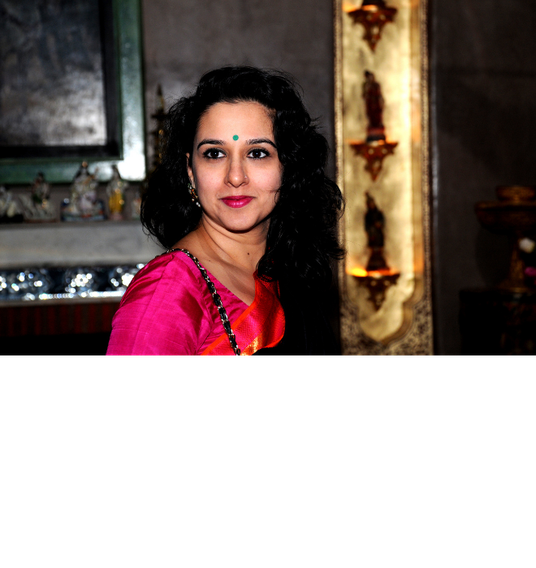
There are royals who inherit, and then there are royals who inherit a sense of duty so deep that it spills far beyond palace walls. Radhikaraje Gaekwad of Baroda belongs to the second kind. In her, the idea of royalty is neither distant nor decorative; it is lived as responsibility, as voice, and as action.
Born into the Wankaner royal family and later becoming the Maharani of Baroda, she carries lineage with a rare modern ease. Yet what makes her compelling is not the grandeur of her title, but the seriousness with which she has used it. In her world, heritage is not a relic to be admired from a distance. It is a responsibility to be lived, protected, and placed at the service of others.
Her story is shaped by many forces rather than a single defining moment. A father who believed in speaking up and standing firm. A mother whose compassion and cultural sensitivity left a lasting imprint. An upbringing among intellectually charged bureaucratic circles. An education that passed through Mayo College and Lady Shri Ram College. And a professional beginning with The Indian Express, where truth, clarity, and conviction were part of the daily rhythm. All of this gave her a voice that feels both rooted and expansive.
She speaks of activism not as a separate chapter of life, but as an instinct formed through exposure, responsibility, and conscience. That instinct now finds expression across a wide field: heritage preservation, women’s empowerment, craft revival, and LGBTQIA+ inclusion. To Radhikaraje, these are not unrelated causes. They are part of one moral commitment — to see people, to value people, and to act for people.
A Voice That Refuses Silence
What stands out most in her philosophy is the way she understands allyship. For her, support is not enough if it remains passive. Allyship must be sensitive. It must be respectful. And above all, it must refuse the comfort of being a bystander. As she put it in the interview, “You are also committing a crime if you are a bystander to a violation.” That line gives her social vision its force: silence is not neutrality, and indifference is never harmless.
She expands that idea with remarkable clarity when she says that allyship is not only about celebration, but about action — “standing up if you see an injustice before your eyes.” In her view, the true measure of allyship is whether a person can speak when someone else is being excluded, harmed, or diminished. It is a moral posture, not a social accessory.
That belief gives her social work a particular force. During the pandemic, when many in the LGBTQIA+ community were hit hard by job loss, discrimination, and instability, she responded through the Chimnabai Trust with sustained ration support over several months. It was not symbolic help. It was practical, necessary, and humane. In a time of fear and uncertainty, she chose to make dignity tangible.
That act also reveals something central to her character: she does not treat inclusion as a slogan. She treats it as a duty. Her support for LGBTQIA+ communities is rooted in the conviction that real change begins with education, livelihood, and access. People must be given not just sympathy, but tools. Not just visibility, but a future.
The Trust As a Living Legacy
Under her leadership, the Chimnabai Trust has come to represent a larger idea of royal stewardship. It is not merely an institution of charity; it is an engine of empowerment. Through training, outreach, and livelihood-building initiatives, the trust has worked with women, artisans, and marginalized communities in ways that bridge tradition with opportunity.
Its work reflects a broad and deeply practical vision. For women, it offers skill-building and pathways to economic independence. For artisans, it helps preserve craft while linking makers to markets. For LGBTQIA+ and transgender communities, it opens the possibility of belonging through work, education, and public presence. In each case, the principle is the same: dignity is strengthened when people are equipped to stand on their own feet.
There is something especially telling in this approach. It suggests that for Radhikaraje, heritage is not preserved by keeping it still. It is preserved by letting it breathe, adapt, and serve new human needs. The trust becomes, in that sense, a living extension of her values — one that remembers the past without becoming trapped by it.
Grace Without Distance
Her public life has not been without criticism or resistance. But she appears untroubled by the idea that doing the right thing may be unpopular. Social backlash, online unfollows, and cautious advice have not redirected her purpose. She remains focused on what she believes matters: helping those without a voice, creating opportunities where there were none, and standing firmly in support of communities that have long been overlooked.
This is what gives her presence its unusual depth. She is not interested in the decorative version of royalty. She is interested in usefulness. In service. In a form of leadership that asks what privilege is for, if not to be shared.
And perhaps that is why she resonates so strongly in the present moment. She represents a rare blend of elegance and engagement, tradition and change, lineage and labor. She does not romanticize royalty. She humanizes it.
What She Leaves Behind
When asked about legacy, she does not speak in terms of monuments or remembrance. She speaks instead of values — values for her daughters, values that encourage courage, compassion, and principled action. As she says, “I don’t want to leave any legacy. I want to leave behind values.” That line becomes even more powerful when she adds that she wants to leave “values for my daughters” and values that inspire others “to stand up for people and causes.” In that sentence, legacy ceases to be about being remembered and becomes about how one teaches the next generation to live.
In a time when public life often rewards performance over substance, Radhikaraje Gaekwad offers something quieter and rarer. She suggests that a title can still carry ethical weight. That old institutions can still be made relevant. That compassion can be organized into action. And that royalty, at its best, is not about distance from the world, but responsibility toward it.
She is, in the truest sense, a Maharani of the modern age — not because she stands above others, but because she stands with them.